VEIA.AI briefing · verified 19 November 2026

Geneva AI Summit 2027.Understanding the summit and what it means for leaders.

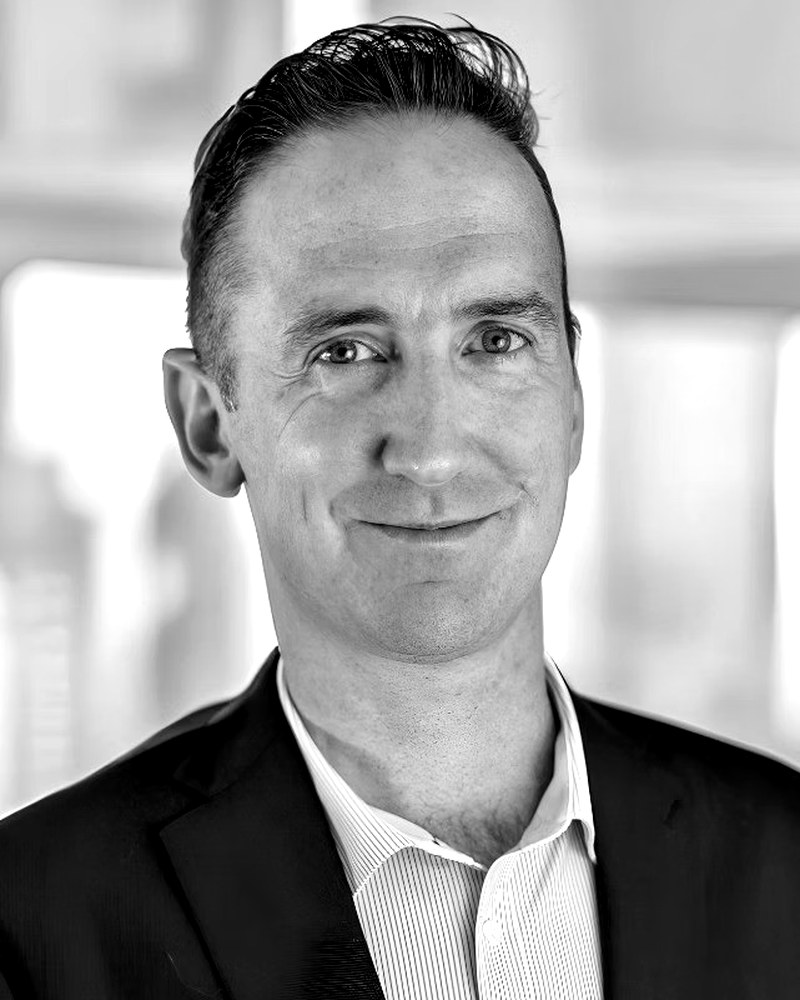
Analysis by Christophe Picou, founder of VEIA.AI

On 21 and 22 June 2027, Geneva hosts the fifth international summit on the governance of artificial intelligence. VEIA.AI follows its preparation from the question that concerns every organisation: how to keep the capacity to decide when AI becomes an infrastructure for work, knowledge and decision-making.

21-22 June 2027

Palexpo, Geneva

Six official themes

From safety to global governance

18 December 2026

Call for Input closes

Road to Geneva

Pre-events until early June 2027

Independent analysis. VEIA.AI has no connection with the organisation of the summit. Official sources at the bottom of the page.

Key facts

The summit in eight answers.

What is the Geneva AI Summit 2027?

The Geneva AI Summit 2027 is the fifth international summit dedicated to the governance of artificial intelligence, after Bletchley Park (2023), Seoul (2024), Paris (2025) and New Delhi (2026). Switzerland is organising it under the motto "Bridging Innovation and Trust", with two priorities: AI as a driver of prosperity and progress for all, and a trustworthy, responsible and safe use of AI.

When and where does it take place?

The summit takes place on 21 and 22 June 2027 at Palexpo, in Geneva. It is held at the same venue and in the same week as the AI for Good summit of the International Telecommunication Union, which is a separate event.

Who organises it?

The Swiss Confederation organises the summit. Preparations are led by the Federal Department of the Environment, Transport, Energy and Communications (DETEC), with the Federal Department of Foreign Affairs (FDFA) and the Federal Department of Economic Affairs, Education and Research (EAER). The Federal Council appointed Fabiola Gianotti as Delegate for the summit on 12 August 2026. The Canton of Geneva is the host canton.

What are the six themes?

AI safety, standards and verification. AI for science and science for AI. AI infrastructure. AI adoption, productivity and human capabilities. Global AI governance. AI, peace and international security.

How can organisations contribute?

The Call for Input is open to all until 18 December 2026, through an online form on the official website. Organisations can also have a pre-event labelled under the Road to Geneva programme, until early June 2027. A call for proposals for side events is announced for early 2027.

Who can attend?

Participation in the summit is by selection and Palexpo's capacity is limited. Participation and accreditation arrangements are announced for the end of 2026. Status at 19 November 2026: they have yet to be published.

Has the programme been published?

Status at 19 November 2026: the programme, the list of speakers and the list of partners have yet to be published. The six themes are set. The Call for Input serves to identify priority topics before the programme is put together.

Why does this summit concern a board of directors?

Because the rules discussed in Geneva apply to systems the organisation already uses. The summit addresses what States and developers must guarantee. It is for the board and the executive team to decide what the organisation entrusts to AI, under whose authority and with what way back.
The trajectory

From Bletchley Park to Geneva: how the conversation has moved.

Bletchley Park established the safety of the most advanced models as a subject of cooperation between States. Seoul added the voluntary commitments of developers. Paris broadened the debate to action, the economy and the public interest. New Delhi opened it to access and impact. Geneva arrives at a time when AI has entered the daily work of organisations. The question is shifting from those who build the systems to those who use them and answer for them.

  1. 23

    Bletchley Park

    2023. Safety of advanced models.

  2. 24

    Seoul

    2024. Developer commitments.

  3. 25

    Paris

    2025. Action and the public interest.

  4. 26

    New Delhi

    2026. Access and impact.

  5. 27

    Geneva

    2027. The organisations that use AI.

The ecosystem

Who is preparing the summit.

Swiss Confederation (DETEC, OFCOM, FDFA, EAER)
Organises the summit, sets the themes and puts together the programme
Republic and Canton of Geneva
Host canton, mobilises Geneva's business community and civil society
International Telecommunication Union
Holds the AI for Good summit in the same week at Palexpo
Road to Geneva programme
Labelled independent pre-events, in Switzerland and worldwide

This work addresses governance between States, safety, standards and the interoperability of frameworks. VEIA.AI follows a complementary level: that of the user organisation, its board of directors and its capacity to stay in control of the decisions it makes.

The six themes

What the summit says. What it asks of the organisation.

Each theme is presented in two parts. The established fact restates the official description. The VEIA reading frames the question it puts to a board of directors or an executive team.

01

AI safety, standards and verification

Established factThe theme covers the standards, safeguards, tests and evaluation mechanisms that make AI systems safe and reliable. It includes assurance, risk management, verification and certification, and their recognition across jurisdictions and sectors.

VEIA readingAn evaluated model still has to be decided on. On what information does the executive team rely when it entrusts an activity to an AI system, and who answers for it before the board?

02

AI for science and science for AI

Established factThe theme covers the acceleration of scientific discovery through AI, the contribution of science to more reliable systems, and international scientific cooperation.

VEIA readingFor a research, healthcare or industrial organisation, knowledge is the central asset. How much of that knowledge goes into AI tools, and on what terms?

03

AI infrastructure

Established factThe theme covers the physical and digital infrastructure AI requires: compute, data, connectivity, energy, water, investment and fair access across countries and actors.

VEIA readingLayer-by-layer technical sovereignty is out of reach; decision-making sovereignty has to be built. Which dependencies does the organisation accept, for how long, and with what way back?

04

AI adoption, productivity and human capabilities

Established factThe theme covers how AI adoption translates into lasting productivity and value for society. It includes the transformation of work, skills and organisational models, as well as the preservation of critical thinking and human autonomy.

VEIA readingThis is the theme that concerns every executive team. What does the organisation entrust to AI, under whose authority, and which skills does it keep to examine, challenge and take back a decision?

05

Global AI governance

Established factThe theme covers how existing principles, conventions, regulations and voluntary commitments fit together. It aims to identify governance gaps and strengthen international cooperation.

VEIA readingInternational frameworks address States and developers. Which reference does the board use when the organisation operates in several jurisdictions and depends on suppliers subject to other laws?

06

AI, peace and international security

Established factThe theme covers AI's contribution to peace, respect for international law, the protection of civilians and humanitarian action, as well as the risks to international security.

VEIA readingEvery organisation is exposed to the geopolitics of its suppliers. Which activity stops if access, a price or a legal regime changes, and who decides on the fallback?

Source of the established facts: official Call for Input form, consulted on 19 November 2026.

The VEIA.AI view

Two levels of governance. Geneva can open the second.

Why VEIA.AI follows this summit

VEIA.AI works where the summit is heading: with organisations that use systems designed by others. Its work is to put boards and executive teams in a position to decide before they integrate. Decision-making sovereignty, governed dependency and reversibility are the notions VEIA.AI has carried since its founding. Geneva gives them an international stage.

The VEIA.AI reading

AI governance is built at two levels. The first is that of States and developers. They set common requirements for the most powerful models and assess compliance with them. The second is that of the organisations that use these models. They choose their uses, take responsibility for their dependencies and keep the capacity to take back control.

The first level produces information. The second turns it into decisions.

Bletchley Park, Seoul, Paris and New Delhi worked on the first level. Geneva can open the second, that of the boards and executive teams who answer for the use of AI in their organisation.

Layer-by-layer technical sovereignty is out of reach; decision-making sovereignty has to be built. It means choosing what is entrusted to AI in full knowledge of its conditions, answering for it before the competent bodies and keeping the means to take back control. It applies to a small business as much as to a group, to a State with its own compute as much as to a country that depends on others for it.

Switzerland knows this situation from the inside. An open economy, interdependent by nature, it has built its stability on cooperation, subsidiarity and the accountability of governing bodies. It can make Geneva the place where one learns to decide within interdependence.

Decide before you integrate.
What we expect

Three expectations for the organisations that use AI.

Each expectation is a position of principle: it names what Geneva can open up.

  1. 01

    That the governance of user organisations enters the debate.

    The summits have dealt with models and those who develop them. Geneva can recognise the second level: that of the organisations that use AI and of the governing bodies that answer for it.

  2. 02

    That the capacity to stay in control becomes a subject in its own right.

    The safety of a model is measured at its developer. Control over a use is decided within the organisation. VEIA.AI expects this capacity to be treated as seriously as model safety.

  3. 03

    That the summit leaves leaders with what they need to inform their choices.

    A summit is judged by what remains usable after it closes. VEIA.AI expects from Geneva an outcome that a board of directors can read, discuss and make its own, whatever its supplier and its country.

Christophe Picou, founder of VEIA.AI

VEIA.AI's involvement

October 2026
VEIA.AI sends a note to the Federal Office of Communications on the accountability of organisations that use AI.
The questions

Five questions Geneva puts to boards and executive teams.

These are the questions the summit brings into view. Each organisation answers them through its own governing bodies.

  1. 01

    Who answers for a decision when a system prepared it?

  2. 02

    How does an organisation arbitrate a dependency that has become critical?

  3. 03

    How far can it automate while keeping its own power to decide?

  4. 04

    What real ability to change supplier or level of automation does it retain?

  5. 05

    Which know-how does it continue to maintain in-house?

Timeline

The deadlines, and what an executive team can do with them.

  1. 1

    Until 18 December 2026 Call for Input.

    Established fact
    Call for Input open to all, through an online form.
    Executive team
    Decide whether the organisation carries an issue, and who signs it.
  2. 2

    End of 2026 Participation and accreditation.

    Established fact
    Participation and accreditation arrangements announced.
    Executive team
    Check the conditions of access to the summit.
  3. 3

    Early 2027 Side events.

    Established fact
    Call for proposals for side events.
    Executive team
    Decide on an event in Geneva, alone or with a partner.
  4. 4

    Spring 2027 Swiss AI law.

    Established fact
    Consultation announced on the Swiss AI law.
    Executive team
    Read the draft with the board, before the summit.
  5. 5

    Until early June 2027 Road to Geneva.

    Established fact
    Submission of Road to Geneva pre-events.
    Executive team
    Have an existing event labelled.
  6. 6

    21-22 June 2027 Geneva AI Summit, Palexpo.

    Executive team
    Follow the outcomes and what comes next.

What the Call for Input form asks

Status as recorded on 19 November 2026. The form is in English. Each participant or entity submits a single contribution, in a personal capacity or on behalf of their organisation. They choose up to three priority themes. For each theme, they select up to three areas and have two free-text fields of 1,900 characters: the gaps to address, then the outcomes expected from the summit. The organisers ask for answers that reflect the contributor's own expertise. Contributions may be passed on to the summit's advisory board and working groups.

This is a call for topics. The selection of speakers and the composition of panels come later.

Road to Geneva

The Road to Geneva programme labels independent pre-events, in person, online or hybrid, anywhere in the world. Organisations from any country can apply. The label grants the official logo and a listing on the summit website. The organiser funds and runs its event.

Regulation

A first half of 2027 with three signals.

Established factSwitzerland signed the Council of Europe Framework Convention on Artificial Intelligence in March 2025. The Federal Council opted for implementation through sector-specific adjustments to the law, complemented by non-binding measures. The Federal Office of Communications states that the consultation on the draft law is scheduled for spring 2027.

VEIA readingIn the first half of 2027, a Swiss organisation receives three signals in quick succession: the draft law under consultation, the voluntary measures that accompany it, then the June summit. The summit gives political direction. Obligations come from the law. The board has every interest in having set its own position before receiving either.

Questions

What leaders ask.

What is the difference between the Geneva AI Summit and AI for Good?

The Geneva AI Summit is the intergovernmental summit on AI governance, organised by the Swiss Confederation. AI for Good is the annual summit of the International Telecommunication Union. Both take place at Palexpo in the same week of June 2027.

Can a company take part in the summit?

A company can contribute now through the Call for Input, open until 18 December 2026, and through a Road to Geneva pre-event. Presence in the summit room depends on a selection whose arrangements are announced for the end of 2026.

Can a French company have a Road to Geneva event labelled?

Yes. The official guidelines open the programme to organisations from around the world, for events held in any country or online.

Will the summit change the obligations of Swiss companies?

The summit produces political direction and, in some cases, voluntary commitments. The obligations of Swiss companies come from Swiss law, whose draft on AI is announced for consultation in spring 2027.

What is the summit's budget?

On 12 August 2026 the Federal Council announced a cost of almost 6 million francs, partly financed by sponsorship. It specified that these contributions have no influence on the direction, the agenda or the outcomes of the summit. Status at 19 November 2026: the list of partners has yet to be published.

What is decision-making sovereignty?

Decision-making sovereignty is an organisation's capacity to choose what it entrusts to AI in full knowledge of its conditions, to answer for it before its governing bodies and to keep the means to take back control. It applies whatever the supplier.

What can a board of directors prepare before June 2027?

Put the subject on its agenda before the summit and before the consultation on the Swiss law. The five questions on this page provide the starting point: accountability, dependencies, automation, change of supplier, in-house know-how.

Who keeps this page up to date?

Christophe Picou, founder of VEIA.AI, an independent advisory firm in AI strategy and governance for boards of directors and executive teams, in France and Switzerland. The page is reviewed with each official announcement.

Official sources

Consulted: 19 November 2026.

Updates

Follow the Geneva AI Summit 2027 with VEIA.AI

This page is updated as the Confederation, OFCOM and the Canton of Geneva make announcements. Each development is read at two levels: what it officially establishes and what it means for governing bodies.

Last verified
19 November 2026
Next deadline
18 December 2026, Call for Input closes

Update log

19 Nov. 2026
Page created. Call for Input open until 18 December 2026.
Christophe Picou, founder of VEIA.AI

Analysis kept up to date by Christophe Picou, founder of VEIA.AI. VEIA.AI supports boards of directors and executive teams in the decisions that commit the organisation in the face of AI.

Let's talk about your situation.

A first conversation to establish what the summit and the forthcoming law mean for your board or your executive team.

VEIA.AIAI GOVERNANCE ADVISORY

Decide before you integrate.

Independent strategy advisory. France and Switzerland.